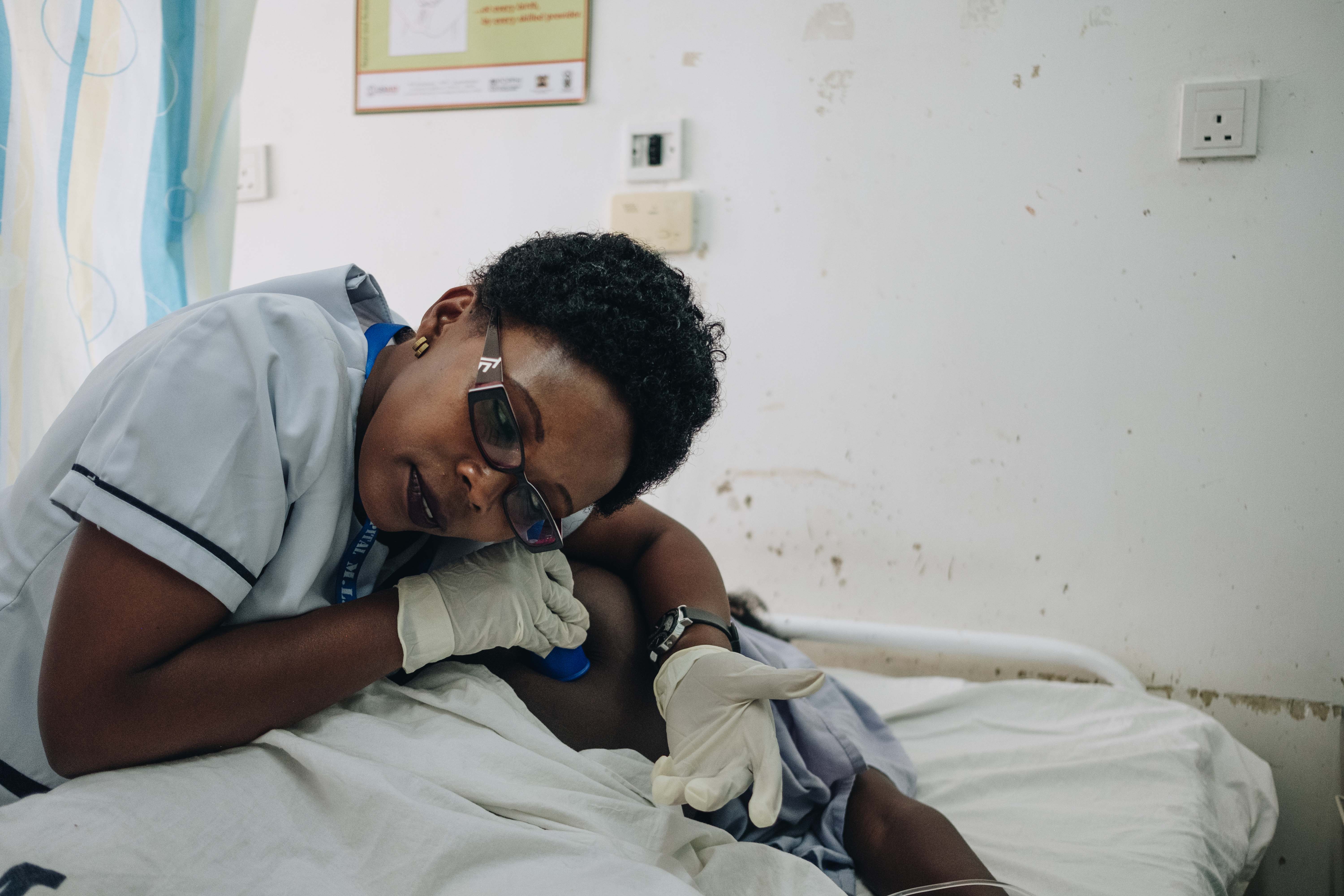
Midwife-led versus other models of care for childbearing women

Midwife-led care leads to fewer admissions to hospital during pregnancy, less use of regional analgesics during labour and childbirth, and more spontaneous vaginal births. However, midwife-led care has little or no effect on the overall number of baby deaths during and after pregnancy.

RHL Commentary by Wiysonge CS

1. INTRODUCTION

Midwives are the primary providers of health care for childbearing women around the world (1). The type and level of maternal care provided by trained midwives is often similar to that provided by obstetricians, family physicians, or other physicians, where such professionals are available. In midwife-led care, the midwife is the lead health-care professional responsible for the planning, organization, and delivery of care given to a woman from the initial booking of antenatal visits to care during the postnatal period. The midwife-led model of care is woman-centred and based on the premise that pregnancy and childbirth are normal life events. Other models of care include: obstetrician-provided care; family physician-provided care, with referral to specialist obstetric care as needed; and shared models of care, in which responsibility for the organization and delivery of care, from initial booking of antenatal visits to the postnatal period, is shared between different health-care professionals (2).

Randomized controlled trials suggest some benefit for women who give birth within the midwife-led model of care compared with those of a similar risk profile who give birth within other models of care (3, 4, 5). These studies also suggest that women who are cared for within midwife-led models of care may be more satisfied with the care received than those who receive other models of care. However, other studies have reported higher rates of illness and death among women and their babies who were cared for within midwife-led home-like birth settings compared with those cared for in hospital settings (6). This Cochrane review sought to compare midwife-led models of care with other models of care, in order to understand better the relative effects of different models on childbearing women and their infants (2).

2. METHODS OF THE REVIEW

The authors followed the rigorous and comprehensive methods recommended by The Cochrane Collaboration (7): (i) to search for and select studies in which pregnant women were randomly allocated to midwife-led models of care and other models of care; (ii) to assess the quality of studies that met predefined criteria; and (iii) to extract and analyse data from the included studies.

3. RESULTS OF THE REVIEW

From a total of 31 studies identified, the authors included in the review 11 randomized controlled trials involving 12 276 women. Compared with women who were cared for under other models of care, women who received midwife-led models of care were less likely to be admitted to hospital during pregnancy [relative risk (RR) 0.90; 95% confidence interval (CI) 0.81–0.99) ], to receive regional analgesics during labour and childbirth (RR 0.81; 95% CI 0.73–0.91), and to have an episiotomy (RR 0.82; 95% CI 0.77–0.88). Women who received midwife-led models of care were also more likely to have spontaneous vaginal birth (RR 1.04; 95% CI 1.02–1.06), to feel in control during labour and childbirth (RR 1.74; 95% CI 1.32–2.30), to be attended to by a midwife known to them (RR 7.84; 95% CI 4.15–14.81), and to initiate breastfeeding (RR 1.35; 95% CI 1.03–1.76). In addition, babies born to women who received midwife-led care were less likely to die before 24 weeks of pregnancy (RR 0.79; 95% CI 0.65–0.97) and were more likely to have a shorter length of hospital stay (weighted mean difference 2 days; 95% CI −1.85 to −2.15). There were no statistically significant differences between the two groups of women for overall fetal and neonatal death (RR 0.83; 95% CI 0.70–1.00).

4. DISCUSSION

4.1. APPLICABILITY OF THE RESULTS

The Cochrane review found that compared with other models of care, midwife-led care of women leads to fewer baby deaths during the first half of pregnancy, fewer admissions to hospital during pregnancy, less use of pain killers during labour and childbirth, and more spontaneous vaginal births. However, midwife-led care has little or no effect on the overall number of baby deaths during and after pregnancy.

All included trials were carried out in high-income countries (Australia, Canada, New Zealand and the United Kingdom), but given that midwives are primary providers of antenatal care in most low-income countries, the findings of the review are likely to be applicable to the health care of women in low- and middle-income countries. However, when assessing the applicability of the review findings to any (low-income) setting, one would have to consider the availability of midwives, community perception of midwives, accessibility to other models of health care for child bearing women, the cost implications of other models of care compared with midwife-led care, and the local epidemiology of maternal and perinatal morbidity and mortality.

4.2. IMPLEMENTATION OF THE INTERVENTION

Overall, given the scarcity of obstetricians and family physicians serving disadvantaged populations in low- and middle-income countries, the use of midwives to provide maternal health care has the potential to reduce inequities in access to antenatal and postpartum care in these settings. However, health systems would have to ensure that the midwives are recruited from, and retained in, underserved communities and are adequately trained, supported and supervised.

4.3. IMPLICATIONS FOR RESEARCH

In view of the lack of rigorous studies on this topic from low- and middle-income countries, there is need for randomised controlled trials that assess the effects of midwife-led care in such countries. In the meantime, programmes for midwife-led models of care in under-resourced settings should be accompanied by a robust monitoring and evaluation system in order to assess their costs and impacts. In addition, further research is required to answer the following questions:

  • What are the relative effects of different midwife-led models of care, e.g. community-based versus facility-based midwife-led models?
  • What is the acceptability, among midwives and the community, of different midwife-led models of care?
  • Why is fetal loss reduced for babies less than 24 weeks in midwife-led models?
  • What are the long-term effects of different models, e.g. on urinary and faecal incontinence and prolonged perineal pain?

Sources of support: Institute of Infectious Disease and Molecular Medicine, University of Cape Town, South Africa

Acknowledgements: I am grateful to Dr Eugene J Kongnyuy of the Liverpool School of Tropical Medicine who provided invaluable comments on an earlier version of this commentary.

References

  • Koblinsky M, Matthews Z. Going to scale with professional skilled care. The Lancet 2006;368:1377–1386.
  • Hatem M, Sandall J, Devane D, Soltani H, Gates S. Midwife-led versus other models of care for childbearing women. Cochrane Database of Systematic Reviews 2008; Issue 4, Art. No.: CD004667; DOI: 10.1002/14651858.CD004667.pub2.
  • Flint C, Poulengeris P, Grant AM. The ’Knowyourmidwife’ scheme - a randomised trial of continuity of care by a team of midwives. Midwifery 1989;5:11–16.
  • Rowley MJ, Hensley MJ, Brinsmead MW, Wlodarczyk JH. Continuity of care by a midwife team vs routine care during pregnancy and birth: a randomised trial. Medical Journal of Australia 1995;163:289–293.
  • Waldenstrom U, McLachlan H, Forster D, Brennecke S, Brown S. Team midwife care: maternal and infant outcomes. Australian and New Zealand Journal of Obstetrics and Gynaecology 2001;41(3):257-264.
  • Hodnett ED, Downe S, Edwards N, Walsh D. Home-like versus conventional institutional settings for birth. Cochrane Database of Systematic Reviews 2005;Issue 1, Art. No.: CD000012; DOI:10.1002/14651858.CD000012.pub2.
  • Higgins JPT, Green S Eds. Cochrane Handbook for Systematic Reviews of Interventions Version 5.0.1 [updated February 2008]. The Cochrane Collaboration, 2008. Available from: www.cochrane-handbook.org.

This document should be cited as: Wiysonge CS. Midwife-led versus other models of care for childbearing women: RHL commentary (last revised: 1 September 2009). The WHO Reproductive Health Library; Geneva: World Health Organization.

Share

Related documents

About the author