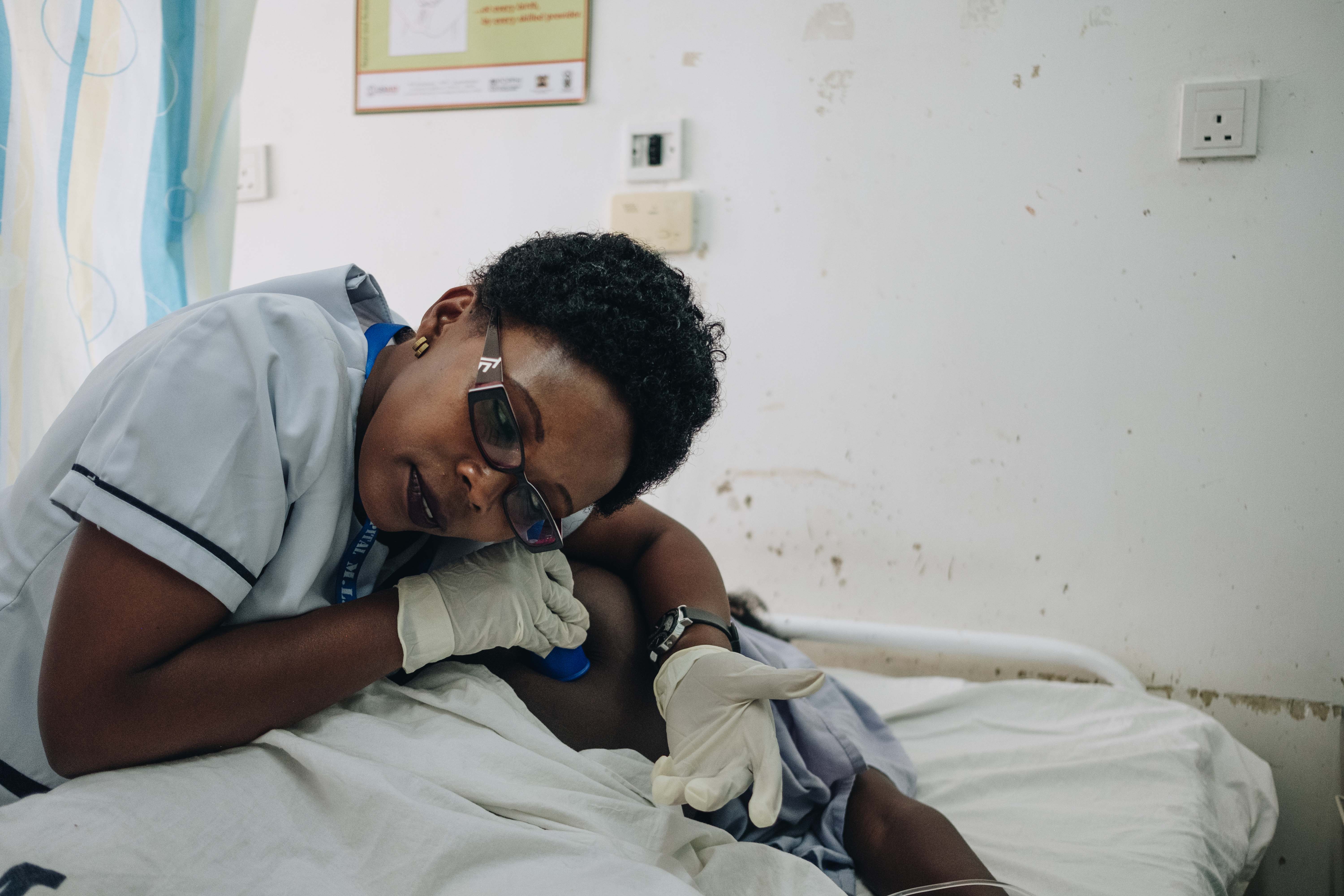
In Lebak, 27 injection providers were included in the study of self-reported hygienic procedures in injection administration, in Lombok 1534. Most often, the injections were administered by nurses. In Lebak, where some government health centres were included in the survey, six providers (22%) charged an extra fee for the administration of injections. This practice is said to be common in many Indonesian health centres (Sciortino 1993).
34Initially the researchers had planned to study a wide variety of providers, but consent could not be obtained, especially not from doctors in private practice. The research was therefore limited to those willing to participate. In Lebak, 27 providers were interviewed (Table 13, Appendix 2.B). Of these, 6 were medical doctors (5 working in government health centres, 1 in private practice); the remainder were nurses and/or midwives (12 working in government health centres, 9 in private practices at the time of the interview). In Lombok there were 15 providers included in the study. All six medical doctors and nine nurses/midwives were interviewed in their private practices.
Most of the providers used disposable syringes (in Lebak 26/27; in Lombok 10/15), the rest a combination of glass and disposable syringes. Incorrect handling of injection equipment is rampant, considering that the only correct way to handle disposable syringes and needles is to discard them immediately after use. Only a small minority of all providers actually admitted doing so (Figure 19). The majority of providers thus reused disposable syringes, 'sterilizing' them by a variety of methods. This practice is largely economically motivated. The majority of the providers interviewed explained that they reuse disposables for economic reasons. They explained that syringes are expensive and in limited supply. It seems a waste to discard syringes that are not defective. More than half of the syringes are not washed before sterilization, only a few are stored in alcohol before reuse. Boiling in water is the method of sterilization most frequently reported, in a minority of cases more than 20 minutes (2/27 of providers in Lebak, 3/15 in Lombok). Only 3 providers in Lombok reported using steam sterilization.
Hogeboom van Buggenum et al.(1993) studied the method of injecting in five health centres (hospitals and puskesmas) in Java and North East Sumatra. Their observations confirm the findings of our self-reported behaviour study. In four of the five health centres the hygienic practices are very unsatisfactory. For cleaning of the injection site, they observed that a piece of cotton wool, which is used for all patients, is soaked in alcohol only at the beginning of the consultation hour. Disposable needles and syringes are reused without sterilization, sometimes over fifty times. In one puskesmas used needles were lying on the table with medication for direct reuse. Although most doctors and nurses are convinced that single use is best, they believe that it is also good enough to rinse the needles with distilled water and to wipe the outside with a piece of wadding soaked in alcohol.

Figure 19. Handling of syringes and needles after use (Percentage of providers who use hygienic practices - Provider survey - Indonesia) - Lebak

Figure 19. Handling of syringes and needles after use (Percentage of providers who use hygienic practices - Provider survey - Indonesia) - Lombok
N = all providers interviewed
Lebak n=27; Lombok n=15
* Not applicable: these providers only used reusable glass syringes