Injection Use and Practices in Uganda - EDM Research Series No. 014
(1994; 54 pages) Ver el documento en el formato PDF
Índice de contenido
Ver el documentoACKNOWLEDGEMENTS
Abrir esta carpeta y ver su contenido1. INTRODUCTION
Cerrar esta carpeta2. METHODOLOGY
Ver el documento2.1 Sampling frame
Abrir esta carpeta y ver su contenido2.2 User-oriented methods
Ver el documento2.3 Provider-oriented methods
Abrir esta carpeta y ver su contenido3. EXTENT OF INJECTION USE
Abrir esta carpeta y ver su contenido4. HYGIENE OF INJECTION PRACTICE
Ver el documento5. POPULARITY OF INJECTIONS
Abrir esta carpeta y ver su contenido6. CONCLUSIONS AND RECOMMENDATIONS
Ver el documentoREFERENCES
Abrir esta carpeta y ver su contenidoLIST OF APPENDICES
Ver el documentoOTHER DOCUMENTS IN THE DAP RESEARCH SERIES
 

2.3 Provider-oriented methods

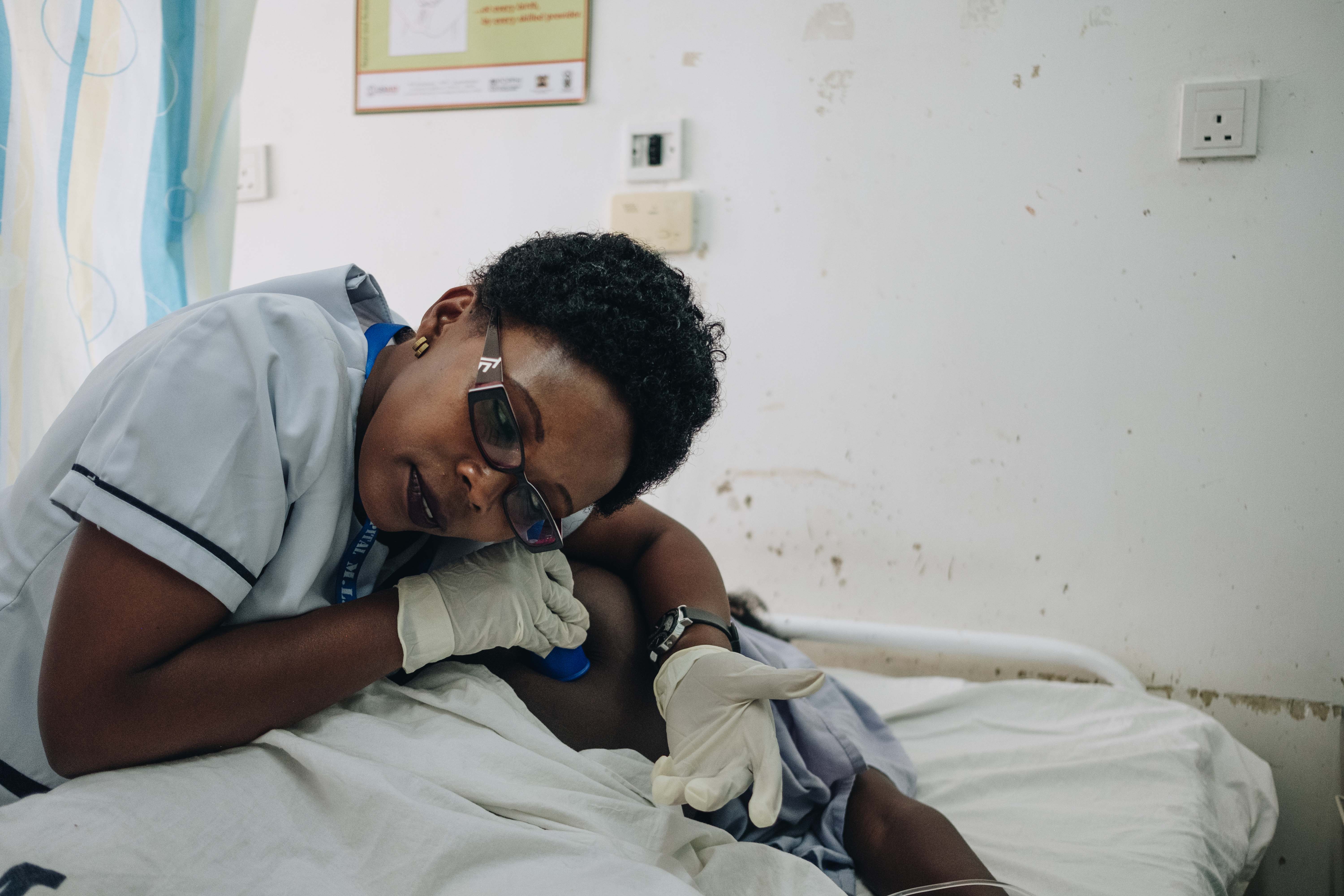
Data were gathered through the use of open-ended questionnaires, a review of prescriptions and actual treatment received, and the observation of hygienic measures. The provider survey was mainly aimed at establishing the prevalence of injection use at provider facilities, evaluating the appropriateness of injection use, and determining the source and type of equipment used.

The provider study was strategically scheduled two months after the completion of the user survey to guide the identification of injection providers within the study communities. Based on the question in the household survey “Where was the last injection administered?” we were in a position to identify a variety of injection providers. In the urban communities it was common to identify more different categories than in the rural areas where health resources are restricted. In addition, not all providers identified were willing to participate in the study. Therefore, although it was originally our intention to select five different categories of providers in each community and 30 providers per region, this was not feasible. We finally managed to come up with 21 injection sources in Busoga and 16 in Ankole (see Table 2), The variety of injection providers included: government health units, private clinics, drugshops, itinerant injectionists, and home providers.

Table 2: Overview of type of providers included in study in Busoga and Ankole Regions, Uganda

Health facility

Busoga
(Eastern Uganda) n=21

Ankole
(Western Uganda) n=16

Government


2


Hospital

1


Health centre

4


NGO health centre

3

-

Private clinic

6

10

Non-formal providers

3

-

drug shops

-

46

Home providers

4

-

6 At the time of the observation, two of these providers did not administer any injections.

Data were also collected through observational methods - this was done in collaboration with two professionally trained medical doctors. Through a combination of observational and informal discussions, the medical doctors evaluated hygienic measures undertaken before, during, and after administering injections. In Busoga, evaluation of hygienic measures was based on both WHO and country specific guidelines developed by the UEDMP and MOH for use of injections (see Appendix 2), In Ankole, evaluation of hygienic measures was strictly based on the WHO guidelines.

The researchers also reviewed the prescribing pattern; this was done on the basis of patient lists filled in by the provider in the presence of the medical doctors (see Appendix 3). Here, 30 consecutive cases visiting a provider facility were registered, specifying their age, sex, symptoms, forms of medication, and cost. Data gathered through this method was useful in establishing and understanding the nature of prescribing patterns at the various provider facilities.


Ir a la sección anterior Ir a la siguiente sección
 

Última actualización: le 3 mayo 2013