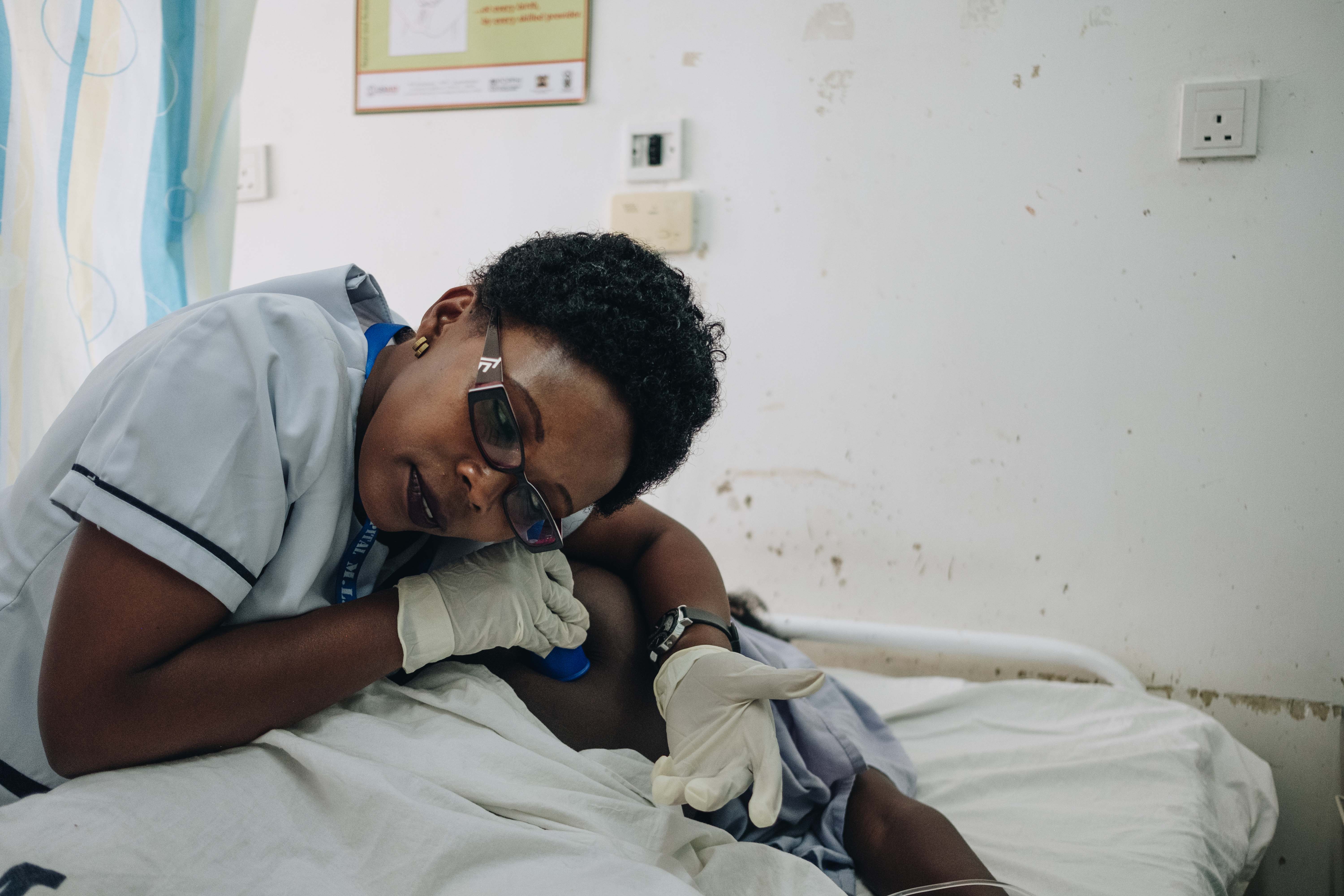
Definition of rational use of medicines
"Patients receive medications appropriate to their clinical needs, in doses that meet their own individual requirements, for an adequate period of time, and at the lowest cost to them and their community." (WHO, 1985).
Irrational use of medicines is a major problem worldwide. WHO estimates that more than half of all medicines are prescribed, dispensed or sold inappropriately, and that half of all patients fail to take them correctly. The overuse, underuse or misuse of medicines results in wastage of scarce resources and widespread health hazards.
Examples of irrational use of medicines include:
→ use of too many medicines per patient (‘poly-pharmacy’)
→ inappropriate use of antimicrobials, often in inadequate dosage, for non-bacterial infections
→ over-use of injections when oral formulations would be more appropriate
→ failure to prescribe in accordance with clinical guidelines
→ inappropriate self-medication, often of prescription-only medicines
→ non-adherence to dosing regimes.
WHO advocates 12 key interventions to promote more rational use:
1 Establishment of a multidisciplinary national body to coordinate policies on medicine use
2 Use of clinical guidelines
3 Development and use of national essential medicines list
4 Establishment of drug and therapeutics committees in districts and hospitals
5 Inclusion of problem-based pharmacotherapy training in undergraduate curricula
6 Continuing in-service medical education as a licensure requirement
7 Supervision, audit and feedback
8 Use of independent information on medicines
9 Public education about medicines
10 Avoidance of perverse financial incentives
11 Use of appropriate and enforced regulation
12 Sufficient government expenditure to ensure availability of medicines and staff.


WHO Model Formulary
Countries at all levels of development - nearly 160 countries in total - have used criteria including safety, efficacy, quality and public health value to produce selective national, provincial and state lists of essential medicines and vaccines. These have become the basis for training, reimbursement, public education, and other public health priorities.55
WHO has itself applied evidence-based techniques to develop the most recent Model List of Essential Medicines56 and the WHO Model Formulary, which reflects the contents of WHO-recommended treatment guidelines.
WHO will work to ensure that medicines are used in a therapeutically sound and cost-effective way by health professionals and consumers in order to maximize the potential of medicines in the provision of health care
EO 7.1
Rational use of medicines by health professionals and consumers advocated
Rationale
Decisions about the use of medicines are strongly influenced by health professionals and consumers. However, it is these two groups which can be the most reluctant to implement policies about rational use. For health professionals and prescribers, rational use will often conflict with peer pressure and/or commercial interests. For consumers, especially where the treatment is free of charge or in the event of serious illness, there is a natural demand to have the ‘latest’ treatment (on the assumption that this equates to ‘best’) regardless of cost. Both of these groups are influenced by the marketing and promotional activities of product patent holders. Despite the scientific logic of rational use training and guidance material, such as treatment protocols, there is strong resistance to their application.
Progress
There has been a major increase in the volume of information in support of rational use, together with increasing use of objective scientific evidence to formulate protocols and policies at international and country levels. The rapid expansion of movements such as the Cochrane Foundation has made vital information readily available. WHO has contributed to this process over the past 20 years through demonstrating the value of evidence-based action. The Essential Drug Monitor, a twice-yearly publication with a 40 000 print-run issued in five languages, is a major channel for advocacy among health professionals and policy-makers. Some of the themes covered have included prescribing skills, improving drug use, drug donations, networking for action, managing drug supply, access, antimicrobial resistance, medicines promotion, and 25 years of the essential medicines concept. Other networks concerned with promoting rational use of medicines have also been supported, including INRUD, INDIA-DRUG (an email discussion group) and the International Society for Drug Bulletins. In 2003, in response to the increasing problem of patient failure to adhere to therapy for chronic diseases, WHO published a review of the evidence for action.57
Challenges remaining
There is a need to engage some of the major players - manufacturers, prescribers, and providers and consumers of medicines - on the importance of ensuring the rational use of medicines. The challenge is to find ways and means to translate the logic of the existing rational use messages and practice into convinced action by the majority of practitioners and consumers. Although intervention research during the past decade has helped identify strategies and interventions that are effective in promoting rational use of medicines, many of these strategies have not been taken on board by governments. In many countries today, more than half of all patients are not treated in accordance with clinical guidelines (WHO/EDM rational drug use database, 2003).
|
Meeting the challenges 2004-2007
Over the next four years WHO will:
→ adapt and distribute materials to countries and promote the use of training and networking with consumer groups and professional societies. While some activities will strengthen the existing training courses, others will involve the more effective use of the Internet to disseminate information.
→ launch a coordinated plan of activity at country, regional, and headquarter levels, to ensure that participants in all training courses are followed up more closely at country level.
→ conduct a readership survey and evaluation of the Essential Drugs Monitor and make changes where necessary to increase circulation.
→ broaden the scope of rational use activities to include chronic diseases such as HIV/AIDS, particularly on the issue of treatment adherence.
|
OUTCOME INDICATORS |
1999 |
2003 |
2007 |
| |
# REPORTING |
% |
TARGET |
# REPORTING |
% |
TARGET |
No. of countries where the promotion of the rational use of medicines is coordinated at the national government level |
na |
na |
na |
93/127 |
73% |
75% |
EO 7.2
Essential medicines list, clinical guidelines, and formulary process developed and promoted
Rationale
The selection of a list of medicines, based on a number of criteria including disease pattern and recommended treatments, is the foundation of the essential medicines concept58. Clinical guidelines indicate the most cost-effective therapeutic approach, on the basis of valid clinical evidence. Their impact is greatest if the end-users, prescribers and, to a certain extent, patients are closely involved in developing the guidelines. Formularies are commonly publications that combine the list of medicines with concise guidance on their safe and rational use. Evidence from practice and research has demonstrated that the most cost-effective use of medicines may vary - depending on factors such as local market prices, availability, and distribution costs - and there is a need to support countries in developing or updating their rational use publications.
Progress
The WHO Model List of Essential Medicines has been regularly revised and proved to be a valuable tool over the past 25 years, complemented and enhanced by the publication in 2002 of the WHO Model Formulary59. Collaboration within WHO has resulted in a formulary that incorporates updates in treatment protocols from the disease-specific departments in WHO. Access is available via the WHO Essential Medicines Library on the WHO website60. The Library links essential medicines to WHO treatment guidelines, the Model Formulary, price information, pharmacopoeal monographs, and other WHO sites including information on adverse drug reactions and the ATC/DDD classification (Figure 24). There are now 135 countries with national standard treatment guidelines and 156 countries with national essential medicines lists, of which about 75% have been updated within the last five years.

Figure 26: The WHO Essential Medicines Library (http://mednet3.who.int/eml/)
Challenges remaining
There is a continuing need within WHO for systematic evidence-based approaches to the production of authoritative treatment guidelines to assist countries and to form the basis of the Model List (Figure: 27). National formularies, lists of medicines that are reimbursable ("positive lists"), and treatment guidelines exist but are only occasionally evidence-based, rarely updated, and often ignored. The challenge is to provide technical assistance to countries to improve their techniques of selection and to develop or update their rational use materials.

Figure 27: Relation between treatment guidelines and a list of essential medicines
|
Meeting the challenges 2004-2007
Over the next four years WHO will:
→ provide technical support to countries to revise their national formulary and positive list development, using an evidence-based approach.
→ strengthen the process of developing evidence-based clinical guidelines within WHO for use by WHO and other UN agencies (UNICEF, UNFPA, UNHCR).
|
OUTCOME INDICATORS |
1999 |
2003 |
2007 |
| |
# REPORTING |
% |
TARGET |
# REPORTING |
% |
TARGET |
No. of countries with national list of essential medicines updated within the last 5 years |
129/175 |
74% |
75% |
82/114 |
72% |
75% |
No. of countries with treatment guidelines updated within the last 5 years |
60/90 |
67% |
70% |
47/76 |
62% |
65% |
EO 7.3
Independent and reliable medicines information identified, disseminated, and promoted
Rationale
Reliable, objective, and evidence-based information is the foundation of rational medicines use. With the development of specialized networks and websites, access to such information is readily available in most parts of the world where there is access to the Internet. However, this still leaves many countries without access to independent and reliable medicines information. In a global survey carried out in 1999, only 50% of 138 reporting countries had Drug Information Centres. The regional range was 40%-89%. The lack of independent and reliable medicines information in many countries is compounded by the pharmaceutical industry’s investment in marketing activities, including direct-to-consumer advertising. In the USA, for example, the pharmaceutical industry spent about US$ 15 billion on promotional activities in 2000.61
Progress
The major advance in this area has been the production of the WHO Model Formulary and the WHO Medicines Library (see also EO 7.2). In addition, a manual on the production of National or Institutional Formularies based on the WHO Model Formulary will be released in 2004. This manual will be issued as a CD-ROM, also containing the WHO Model Formulary.
Challenges remaining
Information available to professionals and consumers is frequently provided by the manufacturers or suppliers of medicines, both of which have a commercial interest, rather than from independent sources with a consumer interest. The imbalance in funding for such activities means that it is difficult for prescribers to obtain comparative unbiased information.
|
Meeting the challenges 2004-2007
Over the next four years WHO will:
→ provide technical support to strengthen national capacity to develop and disseminate medicines information.
→ support national efforts to produce national or institutional formularies and national drug information bulletins.
→ work with the International Society of Drug Bulletins to produce a manual for use at national level in the production of Drug Information Bulletins.
|
OUTCOME INDICATORS |
1999 |
2003 |
2007 |
| |
# REPORTING |
% |
TARGET |
# REPORTING |
% |
TARGET |
| |
|
|
|
|
|
|
No. of countries with a national medicines information centre able to provide independent information on medicines to prescribers and/or dispensers |
62/123 |
50% |
59% |
53/129 |
41% |
50% |
No. of countries with a medicines information centre/service accessible to consumers |
na |
na |
na |
45/127 |
35% |
40% |
EO 7.4
Responsible ethical medicines promotion for health professionals and consumers encouraged
Rationale
The rational use of medicines has often been undermined by the unethical marketing of medicinal products through advertising or the activities of medical representatives. The Report by WHO’s Director-General to the 49th World Health Assembly highlights the continued "imbalance between commercially produced drug information and independent, comparative, scientifically validated and up-to-date information on drugs for prescribers, dispensers, and consumers."
Drug companies spend large amounts of money on promoting their products to doctors around the world. In the United States, the industry spent over US$13.2 billion in 2000, while US$1.1 billion was spent in Italy in 1998. In the developing world, promotion accounts for 20%-30% of sales revenue. There are currently over 80 000 sales representatives in the United States, where the industry sponsored some 314 000 physician events in 2005. Meanwhile, growth in spending on direct-to-consumer advertising of prescription drugs, which is allowed in the United States, has been dramatic, with nearly US$ 2.4 billion being spent in 2001.62
Progress
WHO and HAI/Europe have coordinated a project to establish a database on promotional activities (http://www.drugpromo.info). It is hosted and administered by the WHO Collaborating Centre for Drug Information at the Science University of Malaysia. The objectives of the project are to:
→ document inappropriate medicines promotion both in developing and developed countries.
→ document the impact of inappropriate medicines promotion on health.
→ provide information about tools that can be used to teach health professionals about medicines promotion.
→ promote networking among groups and individuals concerned about medicines promotion by providing links through the website.
As part of the project, four reviews have been written to provide an overview of key promotion-related issues including:
→ What attitudes do people (professional and lay) have towards promotion?
→ What impact does pharmaceutical promotion have on attitudes and knowledge?
→ What impact does pharmaceutical promotion have on behaviour?
→ What interventions have been tried to counter promotional activities, and with what results?
Challenges remaining
While these reviews clearly document the large amounts spent on promotion, there is little evidence on effective ways of addressing this problem in different country settings. The challenge for WHO is to determine what can and should be done to ensure responsible ethical medicines promotion.
|
Meeting the challenges 2004-2007
Over the next four years WHO will:
→ continue to promote criteria for medicines promotion63 and provide technical support to countries in monitoring and regulating the promotion of medicinal products.
→ undertake further research to evaluate the impact of interventions aimed at: improving the preparation of doctors and pharmacists to deal with promotional challenges; how guidelines affect gifts being used as promotional inducements; and how the enforcement of Conflict of Interest guidelines affect promotional activities.
→ review and update where necessary WHO’s 1988 guidelines on ethical criteria for medicines promotion to take account of developments in communication such as the Internet and direct-to-consumer advertising.
|
OUTCOME INDICATORS |
1999 |
2003 |
2007 |
| |
# REPORTING |
% |
TARGET |
# REPORTING |
% |
TARGET |
No. of countries with basic system for regulating pharmaceutical promotion |
92/132 |
70% |
80% |
83/113 |
73% |
76% |
EO 7.5
Consumer education enhanced in recognition of the growing significance of self-medication and of consumer access to knowledge and advice of variable quality
Rationale
Consumers of medicines are the final decision-makers on the use of medicines, whether prescribed or purchased over the counter without prescription. However, insufficient attention is paid to consumer education on the importance of rational use of medicines. Self-medication is increasing in importance, either by default or as a result of deliberate public policy. In developing countries today, out-of-pocket spending by consumers is the main source of spending on medicines. In many countries, the distinction between prescription-only and over-the-counter medicines is meaningless as almost all medicines are available for sale.
Progress
The need for skills development for community education in rational medicine use has been clearly identified in WHO research. In response, a new interactive and skills-oriented training programme on community education in the rational use of medicines has been developed by WHO, in partnership with the University of Amsterdam and an experienced group of developed and developing country experts, and made available in Asia and Africa. In addition, two manuals, one on investigating drug use in communities and the other on interventions to change medicines use in communities, are being prepared by partners at the University of Amsterdam.
Challenges remaining
Despite the risks to personal health from misguided self-medication or the inappropriate use of prescribed treatment by consumers, the full impact of these practices cannot be quantified. The challenge is to promote rational use of medicines amongst consumers with the same level of success as the pharmaceutical industry achieves in marketing their products. As yet there is limited information available as to which are the most effective interventions for use in developing and transitional countries. Further research is needed in different environments and sectors.
|
Meeting the challenges 2004-2007
Over the next four years WHO will:
→ support efforts to provide information and education designed to improve rational use of medicines by consumers. The long-term aim of the training programme on community education is to develop a network of trained people committed to implementing community education in rational use of medicines, evaluating the impact of their work, reporting on experience, and sharing expertise.
→ promote and support systematic research activities aimed at identifying the most effective interventions for improving rational use.
|
OUTCOME INDICATORS |
1999 |
2003 |
2007 |
| |
# REPORTING |
% |
TARGET |
# REPORTING |
% |
TARGET |
No. of countries that have implemented a national consumer education campaign in the last two years |
na |
na |
na |
72/120 |
60% |
60% |
EO 7.6
Drug and therapeutics committees promoted at institutional and district/national levels.
Rationale
An effective drug and therapeutic committee (DTC) will establish and monitor policies and systems for medicines management in hospitals, health programmes or geographical areas. Hospital DTCs are vital structures for implementing comprehensive and coordinated rational medicines use strategies in hospitals. They should be considered as a cornerstone of the hospital pharmaceutical programme, with responsibility for developing and coordinating all hospital policies related to pharmaceuticals, such as the selection of standard treatments and hospital formularies. These committees should also be responsible for adapting the national clinical guidelines and essential medicines list to the needs of the hospital and for carrying out medicines utilization studies and prescription reviews, as well as developing educational strategies to improve medicines use and management.
Progress
A WHO manual on the establishment and functions of DTCs was published in 2003. In collaboration with MSH, an international course with accompanying materials was developed and four international and four national courses were conducted in 2000-2003. A web-based discussion group and a follow-up workshop for past DTC course participants were provided by MSH in collaboration with WHO. Several intervention research projects involving DTCs, aimed at promoting better use of medicines, have been or are currently being supported (in Cambodia, Ghana, Indonesia, Kenya, Laos, and Zimbabwe).
Challenges remaining
Although DTCs have been established in many different settings, many of them fail to ensure the correct management of medicines within the institution or area they represent. In many developing countries, DTCs are hampered by a shortage of qualified staff and lack of capacity in many hospitals and by the lack of incentives from governments or hospital authorities to encourage staff to attend meetings. While some DTCs are responsible for the selection of medicines for the hospital formulary, very few are involved in monitoring medicines use or implementing strategies to improve rational use.
|
Meeting the challenges 2004-2007
Over the next four years WHO will:
→ provide training, support, and advice to countries seeking to establish and sustain functioning DCTs. This will involve regional and international training courses as well as targeted support in response to requests from countries.
→ continue to support intervention research projects on promoting the rational use of medicines through DTCs and present some past results at the next international conference for improving the use of medicines.
→ ensure that future participants at international DTC courses are followed up more closely at country level. Past experience has shown that participants do not use the information they have learnt unless they have developed definite plans of action during the training courses and have follow-up visits at country level.
|
OUTCOME INDICATORS |
1999 |
2003 |
2007 |
| |
# REPORTING |
% |
TARGET |
# REPORTING |
% |
TARGET |
No. of countries with DTCs in the majority of regions/provinces |
na |
na |
na |
32/96 |
33% |
40% |
EO 7.7
Training in good prescribing and dispensing practices promoted
Rationale
Rational use depends on the knowledge, attitudes, and practices of health care practitioners and consumers. Educational strategies for both groups are essential but these are often inappropriate or neglected. In basic (undergraduate) training of health care practitioners, for example, there is often a focus on the transfer of narrow, time-limited pharmacological knowledge, rather than on the development of lifetime prescribing skills and the ability to assess medicines information critically.
Progress
WHO has had an impact on the training of prescribers worldwide through the publication of the Guide to Good Prescribing and training in the use of this. The Teachers Guide to Good Prescribing was published in 2001. Work is in progress to develop material for a Guide to Good Pharmacy Practice. Three international training courses per year in English, French, and Spanish on problem-based pharmacotherapy have been supported. An evaluation of their impact is under way.
Over the past three years, in partnership with other concerned groups, WHO has conducted a wide range of training courses on different aspects of rational use of medicines, together with the production and promotion of training materials.
Training courses related to the rational use of medicines
→ Promoting the rational use of medicines, in collaboration with INRUD and coordinated by Management Sciences for Health (MSH), USA. This course teaches the investigation of medicine use in primary health care and how to promote rational use of medicines by providers.
→ Promoting rational medicine use in the community, in collaboration with the University of Amsterdam, the Netherlands. This course teaches the investigation of medicine use in the community, and how to promote rational use of medicines by consumers.
→ Drugs and therapeutics committees, in collaboration with the Rational Pharmaceutical Program coordinated by Management Sciences for Health, USA. This course teaches methods for evaluating medicine utilization and how to promote rational use of medicines in hospitals and districts.
→ Problem-based pharmacotherapy teaching, in collaboration with Groningen University, The Netherlands, the University of Cape Town, South Africa, the University of La Plata, Argentina (in Spanish) and the National Centre for Pharmacovigilance, Ministry of Health, Algiers, Algeria (in French). This course teaches a problem-based approach to rational prescribing based on WHO’s Guide to Good Prescribing.
→ Pharmacoeconomics, in collaboration with the University of Newcastle, Australia. This course teaches how to do economic evaluation in medicine selection.
→ Medicine policy issues for developing countries, in collaboration with Boston University, USA. This course teaches about general medicines policy including aspects relating to promoting more rational use of medicines.
→ ATC/DDD methodology for medicine consumption, in collaboration with the WHO Collaborating Centre for Drug Statistics Methodology. This course provides an introduction to the application of ATC/DDD methodology in measuring medicine consumption.
Challenges remaining
In many undergraduate medical curricula there is insufficient focus on clinical pharmacotherapy and problem-based teaching methods are not used. As a result, traditional training programmes for health professionals do not prepare them adequately for the rational use of medicines in health care.
|
Meeting the challenges 2004-2007
Over the next four years WHO will:
→ advocate for and support the inclusion of problem-based and skills-based pharmacotherapy teaching in undergraduate and postgraduate training programmes for health professionals.
→ support an evaluation of the prescribing habits of doctors and prescribers who received problem-based pharmacotherapy training compared with those who did not. Such evaluation can be used to advocate for more appropriate training on clinical pharmacotherapy teaching at both undergraduate and postgraduate levels.
|
OUTCOME INDICATORS |
1999 |
2003 |
2007 |
| |
# REPORTING |
% |
TARGET |
# REPORTING |
% |
TARGET |
No. of countries that include the concept of essential medicines in basic curricula for medicine and/or pharmacy |
na |
na |
na |
72/88 |
82% |
85% |
EO 7.8
Practical approaches to contain antimicrobial resistance developed based on the WHO Global Strategy to Contain Antimicrobial Resistance.
Rationale
Irrational use of antimicrobials, including their use in agriculture, is one of the major drivers of increasing antimicrobial resistance. As a result, some infections are now untreatable with first-line antimicrobials in some parts of the world. Surveys have revealed that 25%-75% of antibiotic prescriptions in teaching hospitals in both developed and developing countries are inappropriate.64 In addition, as many as 30%-60% of patients in primary health care centres receive antibiotics (perhaps twice what is clinically needed).65 Surveys have also revealed that most episodes of illness are self-medicated and that most people purchase incomplete courses of medication, including antibiotics, and/or do not adhere to the correct dosing regimes.
Progress
WHO has recognized antimicrobial resistance to be a problem of increasing public health concern and passed a number of resolutions encouraging Member States to take measures to contain antimicrobial resistance66. The WHO Global Strategy to Contain Antimicrobial Resistance and other supporting documents were published in 200167 and a follow-up meeting on how to implement the Global Strategy held in 2002. EDM has provided technical assistance in developing national plans to contain antimicrobial resistance in six countries and three regions. A number of pilot projects have been started in India and South Africa involving the development of a methodology for the linked surveillance of antimicrobial use and resistance.
Challenges remaining
The continuing overuse, underuse, and misuse of antibiotics leads to antimicrobial resistance patterns that are neither measured nor contained, with consequent health and financial implications for countries - a problem that is on the increase worldwide. At the national level there is often a lack of data on antimicrobial use and data on resistance are inappropriate for use at the local level as resistance patterns and antimicrobial use can vary widely within countries. In addition, there is a lack of methods applicable at the local level for measuring antimicrobial resistance and use.
|
Meeting the challenges 2004-2007
Over the next four years WHO will:
→ work with other agencies to develop tools and promote programmes to measure and contain the threat of antimicrobial resistance.
→ pursue the pilot projects aimed at developing a methodology for linked surveillance of antimicrobial use and resistance at country level and use the results to guide practical advice to countries.
→ continue to provide targeted technical support, where requested, to countries and regions.
→ develop a policy perspective paper to advise policy-makers on how to contain antimicrobial resistance.
|
OUTCOME INDICATORS |
1999 |
2003 |
2007 |
| |
# REPORTING |
% |
TARGET |
# REPORTING |
% |
TARGET |
No. of countries with national strategy to contain antimicrobial resistance |
na |
na |
na |
37/113 |
33% |
40% |
EO 7.9
Identification and promotion of cost-effective strategies to promote rational use of medicines
Rationale
Since irrational use of medicines is not limited to one area of the health sector, strategies should be designed to cover the public and private sectors and to target self-medication and prescribing habits. What is needed is a major shift in the knowledge and behavioural patterns of both individuals and social groups, including households, communities, health professionals, educational institutions, and industry. In view of the financial constraints, there is a need to identify and target priority areas. From a health economics perspective, these areas should be those which are expected to yield the largest improvement in social benefit (or reduction of unnecessary social costs) for the money invested.68
Progress
WHO, in collaboration with partners including MSH and the Universities of Harvard and Boston in the United States, has supported more than 20 intervention research projects in developing countries, aimed at providers and consumers, hospitals, primary health care and the community, and private and public sectors. Technical support for these has included supervisory visits as well as workshops for proposal development and data analysis. A policy perspective paper outlining core components of a national strategy to promote rational use of medicines was published in 2002.69 WHO is also developing a quantitative database of all medicine use studies from 1993 onwards in order to assess global progress in promoting rational use of medicines. In addition, WHO has supported INRUD and associated training programmes. A major advance was the first francophone course on promoting rational use of medicine, conducted in Rwanda in 2003. This will be replicated in 2004 and followed up with field activities.
Challenges remaining
Irrational prescribing, dispensing, and consumption of medicines exist even in the presence of agreed strategies and policies for rational use, especially in developing countries. Although past research has identified the effectiveness of many interventions, particularly when used in combination, many countries have not implemented or scaled up such strategies, possibly because of the expense involved. The challenge for WHO is to evaluate the cost-effectiveness of various strategies and to advocate a package of priority cost-effective interventions to be adopted by countries. An additional challenge is the need to identify effective interventions to improve medicines use in hospitals and in the treatment of chronic diseases such as HIV/AIDS in developing countries.
|
Meeting the challenges 2004-2007
Over the next four years WHO will:
→ continue to support intervention research projects to evaluate the cost-effectiveness of interventions to improve the rational use of medicines. The results of projects supported in the last four years and the WHO rational medicine use database will be presented at the 2nd International Conference for Improving the Use of Medicines in April 2004 in Thailand. The global agenda for the next five years, to be decided at this conference, will include evaluation of the impact of national polices on medicines use and the cost-effectiveness of interventions.
→ continue to work with INRUD to support training programmes on promoting rational use of medicines, running fewer courses but with greater follow-up of participants’ activities at country level.
→ increase efforts to improve the rational use of medicines for chronic diseases.
|
OUTCOME INDICATORS |
1999 |
2003 |
2007 |
| |
# REPORTING |
% |
TARGET |
# REPORTING |
% |
TARGET |
No. of countries that have undertaken a national assessment/study of the rational use of medicines |
na |
na |
na |
57/97 |
59% |
60% |