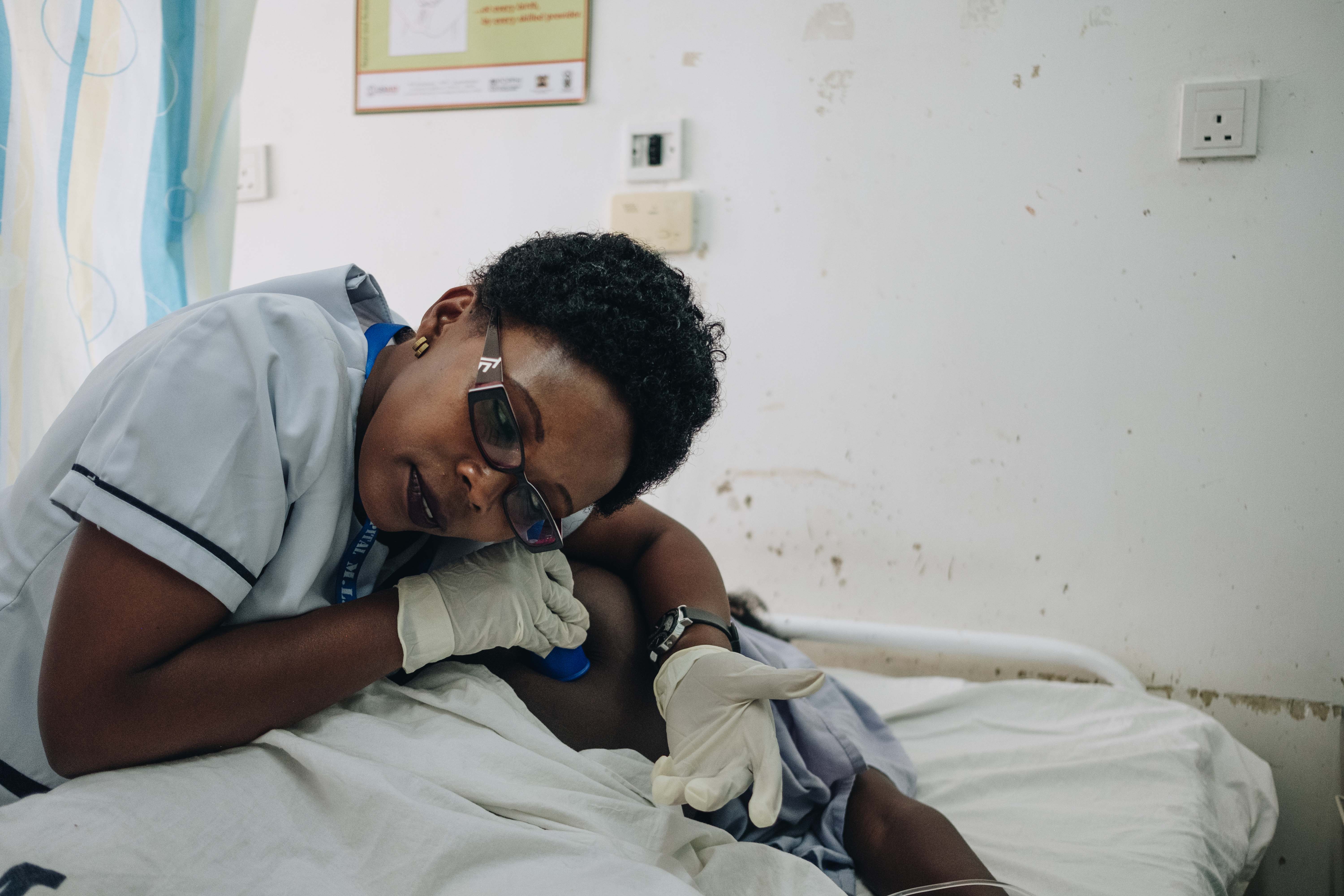
In response to the AIDS epidemic, MSF has provided prevention services, voluntary counselling and testing, psychosocial support, palliative care and safe blood transfusions since the early 1990s. Treatment for opportunistic infections in Latin America, South-East Asia and Africa has also been given. In addition MSF has been using ARVs for postexposure prophylaxis for health workers and rape victims, and the prevention of mother-to-child transmission (PMTCT).
By the end of the 1990s, MSF had decided to start providing ARV therapy as part of the continuum of care. The first ARV project began with just a handful of patients in Thailand in late 2000. By June 2003, more than 5,000 people had received ARVs in MSF projects in Burkina Faso, Cambodia, Cameroon, Guatemala, Honduras, Indonesia, Kenya, Malawi, Mozambique, Myanmar (Burma), South Africa, Thailand, Uganda and Ukraine. By the end of 2003, MSF expects to be treating approximately 10,000 people, opening new projects in Angola, Benin, Burundi, Cambodia, Chad, China, the Democratic Republic of Congo, Ethiopia, Guatemala, Guinea, Honduras, Kenya, Laos, Nigeria, Rwanda, Peru, Zambia and Zimbabwe. In most countries, MSF provides ARVs free of charge to its patients.

Figure 1 Medicine management cycle
MSF's projects aim to make life-prolonging AIDS treatments available to individuals in need, and also to provide experience that informs and is replicable for building individual and national treatment programmes. MSF uses projects both to assess and demonstrate the feasibility of ARV therapy in a range of resource-poor settings, with some projects operating out of slums, others via mobile HIV clinics and others within district or provincial hospitals. One overarching principle is to work closely with national authorities to adapt treatment programmes to local settings.
This experience not only covers a broad geographic area but has also spanned a range of countries with a variety of development and per capita income levels, health system infrastructures and patent systems. While these projects can only reach a small fraction of those in need, MSF hopes that its operational research will have broader impacts in the longer-term.

Figure 2. The figure demonstrates the reduction of prices offered to MSF and other not-for-profit treatment providers over the past three years in three countries.